
As investors and entrepreneurs increasingly research financial companies before using their services, understanding an organization’s background has become just as important as evaluating its products. One search phrase that has gained attention is trevianwealth.com funding and mission vision industry type, as users want to know how the Company is positioned, what it aims to achieve, and whether its business model appears sustainable.
In this article, we are going to look beyond funding and explore the general business of Trevian Wealth. What constitutes funding for financial companies will be explained, how mission statements define what a company actually is, company classifications will be examined, and what current clients and partners generally seek out.
The official record of how Trevian Wealth has been financed may be very sparse online, so in the absence of official reporting, it will be of general interest and will explain the practice of how industry firms tend to get their funding.
Table of Contents
Quick Facts
| Topic | Overview |
| Company Name | Trevian Wealth |
| Industry | Financial Services / Wealth Management |
| Primary Focus | Wealth planning and financial solutions |
| Business Model | Client-focused financial advisory services |
| Funding Information | Limited publicly disclosed information |
| Mission | Focused on helping clients achieve financial goals |
| Vision | Long-term wealth creation and financial confidence |
| Target Customers | Individuals, families, professionals, and investors |
Understanding Trevianwealth
Trevianwealth appears to operate within the financial services ecosystem, offering wealth-related guidance and financial planning solutions. Companies in this sector generally assist clients in areas such as:
- Investment planning
- Retirement strategies
- Wealth preservation
- Financial education
- Risk management
- Portfolio guidance
Rather than selling tangible goods, wealth management practices develop long-lasting customer relations based on advisory know-how and customized monetary preparation.
Trevianwealth.com Funding and Mission Vision Industry Type Explained
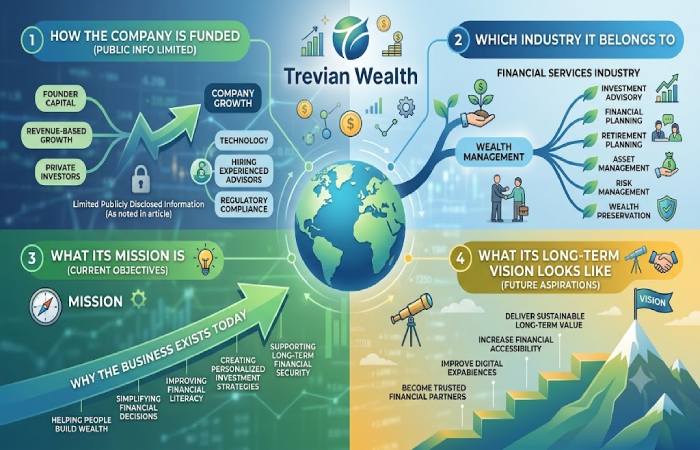
When users search for trevianwealth.com funding and mission vision industry type, they are generally looking for four key areas:
- How the Company is funded
- What its mission is
- What its long-term vision looks like
- Which industry it belongs to
Seeing these things allows a glimpse of how an organization might stand the test of time and where it is going.
What Is the Industry Type?
Trevianwealth fits within the broader financial services industry.
This group comprises businesses focused on assisting customers and commercial enterprises in organizing their funds, managing an increase of funds, dealing with investments, retirement plans, and insurance issues.
| Segment | Purpose |
| Wealth Management | Managing long-term wealth |
| Investment Advisory | Investment recommendations |
| Financial Planning | Personal financial goals |
| Retirement Planning | Long-term retirement income |
| Asset Management | Managing investment portfolios |
| Risk Management | Protecting financial assets |
Overall, the economic advice industry can adapt to ongoing change as a result of further change and improvement in the industry.
Funding in Wealth Management Companies
One of the biggest questions behind trevianwealth.com funding and mission vision industry type relates to company funding.
Unlike technology startups that often raise venture capital, wealth management firms commonly operate using different financial structures.
Common Funding Sources
| Funding Type | Description |
| Founder Capital | Business funded by founders |
| Revenue-Based Growth | Expansion funded by profits |
| Private Investors | Capital from private investors |
| Institutional Backing | Funding from financial institutions |
| Strategic Partnerships | Business collaborations supporting growth |
For the situation when information about financing raised by the Company was not released in any open media or sources – please indicate that financing information was not publicly disclosed and do not provide your guesses and assumptions.
Why Funding Matters
Funding influences several aspects of a financial company.
These include:
- Technology investments
- Hiring experienced advisors
- Regulatory compliance
- Customer support
- Expansion into new markets
- Product development
This isn’t to say greater funds equate to better advice or customer outcomes. There’s much more to effective advising, such as experience, transparency, accountability, and client satisfaction.
Mission: Why It Matters
Every financial organization benefits from a clearly defined mission.
A mission explains why the business exists today.
Typical objectives include:
- Helping people build wealth
- Simplifying financial decisions
- Improving financial literacy
- Creating personalized investment strategies
- Supporting long-term financial security
Mission statements often influence company culture, customer experience, and service delivery.
Vision: Looking Toward the Future
While a mission focuses on current objectives, a vision outlines long-term aspirations.
Financial companies often aim to:
- Become trusted financial partners
- Expand advisory capabilities
- Improve digital experiences
- Increase financial accessibility
- Deliver sustainable long-term value
A clear vision helps organizations make strategic decisions over time.
Business Model Overview
Most wealth management firms operate using advisory-based revenue models.
Common Revenue Streams
| Revenue Source | Description |
| Advisory Fees | Ongoing financial planning services |
| Portfolio Management Fees | Investment management |
| Financial Consulting | Specialized financial advice |
| Retirement Planning Services | Long-term planning support |
| Corporate Advisory | Business financial consulting |
Revenue models vary depending on regulatory requirements and the services offered.
How Wealth Management Firms Build Trust
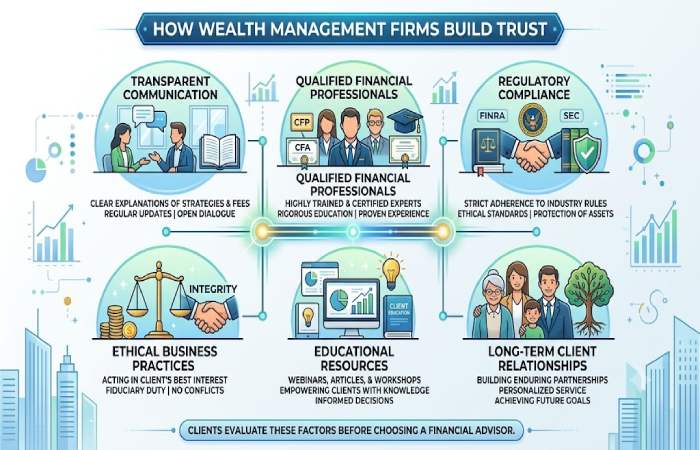
Trust is central to financial advisory services. Organizations typically strengthen credibility through:
- Transparent communication
- Qualified financial professionals
- Regulatory compliance
- Ethical business practices
- Educational resources
- Long-term client relationships
Clients often evaluate these factors before choosing a financial advisor.
Key Characteristics of the Wealth Management Industry
| Characteristic | Importance |
| Client Trust | Very High |
| Regulatory Compliance | Essential |
| Data Security | Critical |
| Personalized Advice | High |
| Long-Term Relationships | High |
| Professional Certifications | Important |
Services Commonly Offered
Although offerings vary by firm, wealth management organizations often provide:
- Personal financial planning
- Retirement planning
- Investment advisory
- Portfolio diversification
- Estate planning coordination
- Wealth preservation strategies
- Risk assessment
- Tax-aware investment planning
These services are generally tailored to individual financial goals and risk tolerance.
Digital Transformation in Wealth Management
Technology is reshaping financial advisory services.
Modern firms increasingly adopt:
- Online client portals
- Digital document management
- Virtual consultations
- Investment dashboards
- Financial planning software
- Secure communication platforms
These innovations improve accessibility while maintaining strong client relationships.
Factors Investors Often Evaluate
When researching a financial advisory business, investors and prospective clients may consider:
| Evaluation Factor | Why It Matters |
| Company Background | Business credibility |
| Leadership | Strategic direction |
| Regulatory Status | Compliance and trust |
| Service Quality | Client experience |
| Transparency | Decision-making confidence |
| Industry Reputation | Market standing |
Benefits of Wealth Management Services
Professional financial guidance can offer several advantages.
Potential Benefits
- Better financial organization
- Long-term investment planning
- Retirement preparation
- Risk management
- Goal-based investing
- Ongoing portfolio reviews
- Financial education
- Personalized recommendations
Outcomes depend on individual circumstances, market conditions, and the suitability of the advice provided.
Challenges Within the Industry
Like all financial sectors, wealth management firms face ongoing challenges.
These include:
- Changing regulations
- Market volatility
- Cybersecurity risks
- Rising client expectations
- Technological disruption
- Increased competition
Successful firms continually adapt through innovation, compliance, and client-focused service.
How to Evaluate a Wealth Management Company
Before selecting any financial advisory provider, consider:
- Professional qualifications
- Regulatory registration
- Fee structure
- Transparency
- Communication quality
- Service offerings
- Client support
- Long-term investment philosophy
Taking time to review these factors can help users make more informed decisions.
Frequently Asked Questions
What is trevianwealth.com funding and mission vision industry type?
The phrase refers to understanding Trevian Wealth’s business funding, organizational mission, long-term vision, and the financial services industry in which it operates. Publicly available funding details may be limited, so it’s best to rely on official company disclosures for verified information.
What industry does Trevian Wealth belong to?
Based on available information, Trevian Wealth operates within the financial services and wealth management sector.
Is Trevian Wealth a startup?
Without official company disclosures, it is not possible to definitively classify its stage. Users should consult official company information for the most current details.
Why is mission important for financial companies?
A mission provides direction, shapes company culture, and communicates how the organization intends to serve its clients.
Why does funding matter?
Funding can support technology, compliance, hiring, and expansion, but it should be evaluated alongside transparency, expertise, and client service quality.
Final Thoughts
Getting to know TrevianWealth.com’s funding, vision and mission requires looking at more than one data point. Publicly accessible funding data might be limited. However, a deeper review of TrevianWealth.com’s business sector, business type, company mission, and business vision will give a more holistic overview.
Ultimately, if you’re assessing wealth management providers, information about transparency, compliance, professional qualifications, client-oriented service, and long-term strategy likely outweighs anything on funding. If you are making significant investment decisions, you may want to always confirm critical business facts directly through official channels for the Company itself.